
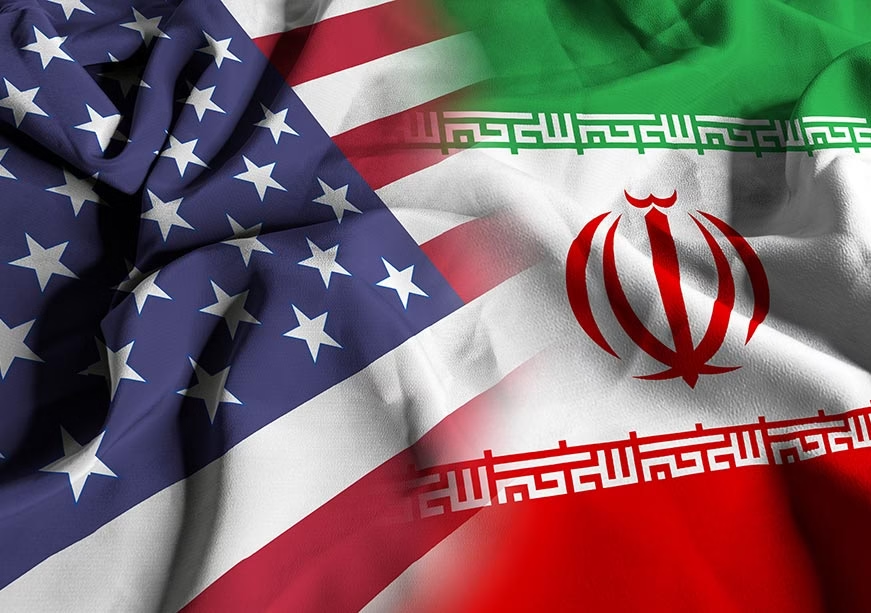

Trump’s Iran Strategy: Military Buildup & Tehran’s All-Out War Warning-
Tensions between the United States and Iran have intensified sharply following Washington’s decision to deploy the USS Abraham Lincoln aircraft carrier strike group toward the Middle East. The move signals a significant escalation in military readiness amid growing concerns over Iran’s nuclear program and regional stability.
- Trump’s Iran Strategy: Military Buildup & Tehran’s All-Out War Warning-
- U.S. Expands Military Presence Near Iran
- Shift in U.S. Military Strategy
- Trump Issues Warning as Iran Pushes Back
- U.S. Demands and Justification for Action
- Gulf Nations Distance Themselves From Conflict
- Strategic Importance of Diego Garcia
- Unrest and Crackdown Inside Iran
- U.S. Naval Capabilities Signal Strength
- Military Drills Raise Alarm
- Regional and Global Reactions
- Risk of Imminent Escalation
U.S. Expands Military Presence Near Iran
The U.S. Navy has positioned a large fleet of warships, led by the nuclear-powered USS Abraham Lincoln, in the Indian Ocean, with operations extending toward Iran. Alongside this deployment, American forces are preparing for extensive military drills across the Persian Gulf and nearby waters, underscoring heightened alert levels.
Shift in U.S. Military Strategy
Initially, U.S. planners considered launching potential strikes from bases located in the Middle East. However, strong concerns from regional allies over possible Iranian retaliation prompted a strategic shift. Washington is now focusing on operating directly from naval assets, reducing reliance on land bases within the region.
Trump Issues Warning as Iran Pushes Back
Former U.S. President Donald Trump has issued renewed warnings to Iran, urging Tehran to comply with American demands or face military consequences. Trump has expressed confidence that sustained pressure will ultimately force Iran into negotiations, while Iranian officials continue to reject such demands.
U.S. Demands and Justification for Action
The United States is pressing Iran to halt uranium enrichment, abandon any pursuit of nuclear weapons, and limit its missile capabilities. American officials argue these measures are essential for global security, framing Iran’s nuclear activities as a key justification for potential military action.
Gulf Nations Distance Themselves From Conflict
Countries across the Gulf, including Saudi Arabia, the United Arab Emirates, and Qatar, have reportedly assured Iran that their territories and airspace will not be used for any U.S. attack. These nations fear becoming targets of Iranian retaliation if hostilities break out.
Strategic Importance of Diego Garcia
The U.S. is expected to rely on Diego Garcia, a British-controlled island in the Indian Ocean, as a key operational base. The remote location allows American forces to launch long-range air operations while remaining beyond the immediate reach of Iranian counterattacks.
Unrest and Crackdown Inside Iran
Amid external tensions, Iran has faced significant internal unrest in recent weeks. Reports indicate a widespread crackdown, including internet restrictions and mass arrests. Unofficial estimates suggest large-scale casualties, raising international concern over the humanitarian situation.
U.S. Naval Capabilities Signal Strength
The USS Abraham Lincoln can deploy up to 80 aircraft, including F-35 stealth fighter jets and advanced surveillance planes designed to detect and disrupt enemy radar systems. This capability significantly enhances U.S. strike and intelligence capacity in the region.
Military Drills Raise Alarm
U.S. Central Command has announced multi-day aerial military exercises across the Middle East. These drills are widely viewed as both a warning to Iran and a rehearsal for potential conflict.
Regional and Global Reactions
Saudi Arabia, the UAE, and Qatar have publicly reiterated their refusal to support military action against Iran from their soil. Turkey has also opposed any foreign intervention, calling instead for diplomatic solutions. Israel, however, has stated it is prepared to respond with overwhelming force if attacked by Iran.
Risk of Imminent Escalation
With military assets in position and diplomatic tensions running high, analysts warn that the risk of a rapid escalation remains significant. The current situation represents one of the most volatile moments in U.S.–Iran relations in recent years.