
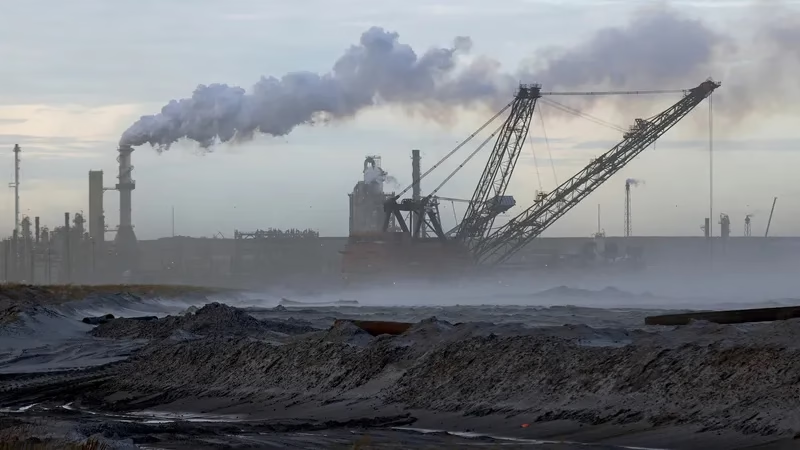

Canada’s internal political debates and external trade decisions are increasingly shaped by Alberta’s economic strength and the country’s position in global trade networks. As discussions around provincial autonomy, energy exports, and foreign partnerships intensify, Alberta’s role has come into sharper focus.
Alberta’s Central Role in Canada’s Economy
Alberta is Canada’s largest oil-producing province and remains the backbone of the country’s energy sector. It accounts for approximately 85% of Canada’s total oil production, making it a key contributor to national revenue and energy security.
The province is also the primary supplier of Canadian oil to the United States, providing nearly 75% of Canada’s oil exports. This close energy link means developments in Alberta have direct consequences for Canada–US trade relations and North American energy markets.
A Wealthy Province With Outsized Economic Influence
Despite having a population of only around five million, Alberta’s economic output is substantial. The province’s gross domestic product is estimated at $459 billion, placing it among the strongest regional economies in North America.
Within Canada, Alberta consistently ranks among the top three provinces by GDP. Its high GDP per capita underscores why the province plays such an influential role in national fiscal discussions and policy debates.
Why Alberta’s Economy Shapes Political Debate
Alberta’s financial contribution has long been at the centre of political friction between provincial and federal authorities. Disagreements over taxation, revenue sharing, and energy regulation have fuelled calls for greater autonomy.
Supporters of increased provincial powers argue that Alberta contributes more to the federal system than it receives, while critics caution that economic strength alone does not offset the risks associated with political fragmentation.
Canada’s Trade Outreach and China Factor
Alongside domestic challenges, Canada has also been navigating complex global trade dynamics. Efforts to diversify trade partnerships have included discussions around strengthening economic ties with China, one of the world’s largest markets.
Such a move was widely viewed as an attempt to safeguard Canadian economic interests amid shifting global power balances and supply-chain uncertainties.
US Concerns and Strategic Pressure
However, closer trade engagement with China has raised concerns in Washington. The United States has reportedly warned Canada that deeper economic alignment with Beijing could result in trade or diplomatic complications. Follow us on Facebook
This response highlights the strategic constraints Canada faces as it seeks to balance its economic ambitions with its long-standing partnership with the US.
Broader Implications for Canada’s Global Position
The intersection of Alberta’s economic influence and Canada’s trade choices illustrates how domestic and international factors are increasingly interconnected. Decisions made at the provincial level now carry national and geopolitical consequences.
As Canada continues to manage energy security, trade diversification, and alliance commitments, Alberta’s role will remain central to shaping the country’s economic and political direction.
similar posts, visit us at http://www.shiboy.com