
US Tariff on India Set at 18% After Trade Deal: What It Means for Indian Exports, American Consumers, Bilateral Trade Ties, Economic Growth, Supply Chains, and Future Negotiations Between India and the United States
The US tariff on India has been fixed at 18% following the latest trade agreement between the two countries. This development marks an important moment in India–US economic relations and is expected to influence trade flows, pricing, and business decisions on both sides.
The tariff applies to selected categories of Indian exports entering the United States. While it is not a blanket duty on all goods, the move has drawn attention due to its possible impact on exporters and manufacturers.
Why the 18% Tariff Matters
For Indian exporters, the US tariff on India means higher costs when selling goods in the American market. Products such as engineering goods, textiles, chemicals, and certain manufactured items could face pricing pressure.
However, trade experts say the tariff level is moderate compared to stricter trade actions seen globally. The agreement has avoided extreme penalties, keeping the door open for future adjustments.
From the US perspective, the tariff is meant to protect domestic industries while still allowing imports to continue. American policymakers have framed the move as a balance between fair trade and economic protection.
Impact on Indian Businesses
Indian exporters may need to adjust strategies. Some companies could absorb part of the cost to stay competitive. Others may pass it on to buyers or explore new markets beyond the US.
Large exporters are better placed to manage the impact, but small and medium businesses could feel more pressure. Industry bodies are expected to seek support measures from the government if required.
What It Means for Consumers
American consumers could see slight price increases on some imported Indian products. However, analysts believe the overall impact on retail prices will be limited, as supply chains are diverse and competitive.
Broader Trade Relations
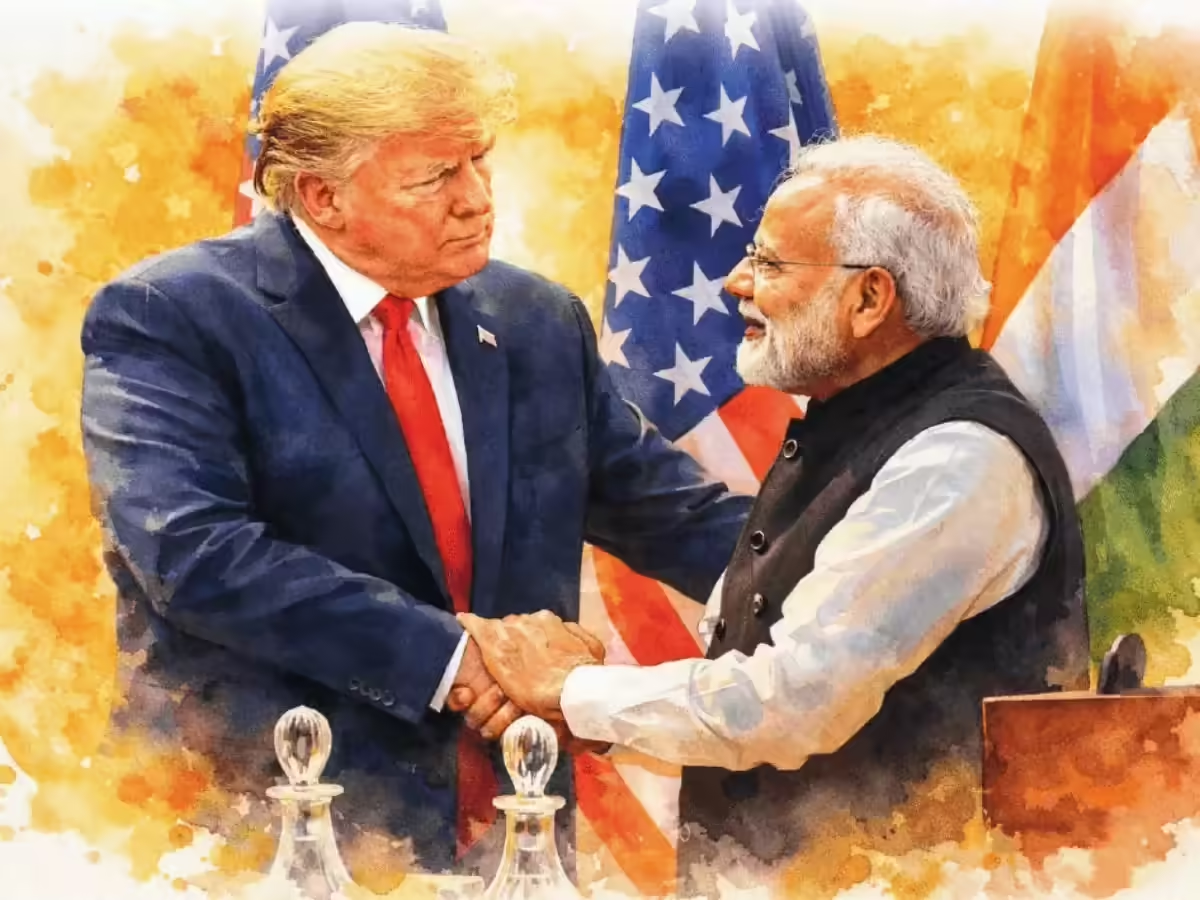
The US tariff on India does not signal a breakdown in relations. In fact, both governments have described the trade deal as constructive. Bilateral trade between India and the US continues to grow, crossing hundreds of billions of dollars annually.
The agreement also includes cooperation in technology, defence manufacturing, clean energy, and supply chains. These areas could offset the effects of tariffs in the long run.
What Comes Next
Trade talks are ongoing. Officials have indicated that tariffs may be reviewed based on trade volumes, compliance, and broader economic conditions.
Experts say this phase should be seen as part of a longer negotiation process rather than a final outcome.
Conclusion
The US tariff on India at 18% presents challenges, but it also brings clarity. Businesses now know the rules and can plan accordingly. While short-term adjustments may be needed, the overall trade relationship between India and the United States remains strong and forward-looking.
🔥 Stronger Opinion / Pro-India Explainer
The US tariff on India set at 18% should not be seen as a setback. Instead, it reflects India’s growing economic strength and bargaining power on the global stage.
Unlike smaller economies that face unpredictable trade barriers, India has negotiated a structured agreement with the United States—one that keeps trade channels open while protecting long-term interests.
India today is no longer just a low-cost exporter. It is a manufacturing hub, a technology leader, and a key player in global supply chains. The fact that trade continues at scale despite tariffs shows how dependent global markets are on Indian goods and services.
Short-term pressure on exporters is real. But Indian businesses have adapted before—and succeeded. Many exporters are already moving up the value chain, focusing on quality, branding, and innovation rather than price alone.
More importantly, the trade deal keeps strategic cooperation intact. Defence manufacturing, clean energy, semiconductors, and digital services remain priority areas. These sectors promise far greater gains than any single tariff concession.
The US tariff on India also strengthens India’s push to diversify markets. Europe, West Asia, Africa, and Southeast Asia are becoming key destinations, reducing over-dependence on any one country.
India’s economic story is shifting from volume to value. Tariffs may slow some segments, but they will not stop India’s rise.
In the long run, this deal places India in a position of stability and strength—ready to negotiate, adapt, and grow on its own terms.
📌 FAQs for Rich Results
What is the US tariff on India after the trade deal?
The US tariff on India has been set at 18% on selected Indian exports following the latest trade agreement between the two countries.
Does the 18% tariff apply to all Indian goods?
No. The tariff applies only to specific product categories. Many Indian exports continue to enjoy regular or preferential access.
Why did the US impose an 18% tariff on India?
The tariff aims to balance domestic industry protection in the US while allowing continued trade with India under agreed terms.
How will the US tariff impact Indian exporters?
Large exporters may manage the cost through scale and efficiency, while smaller exporters may need support or market diversification.
Will the tariff affect India–US relations?
No major impact is expected. Both governments have described the trade deal as constructive and forward-looking.
Can the tariff be revised in the future?
Yes. Trade officials from both countries have indicated that tariff levels may be reviewed based on performance and negotiations.