
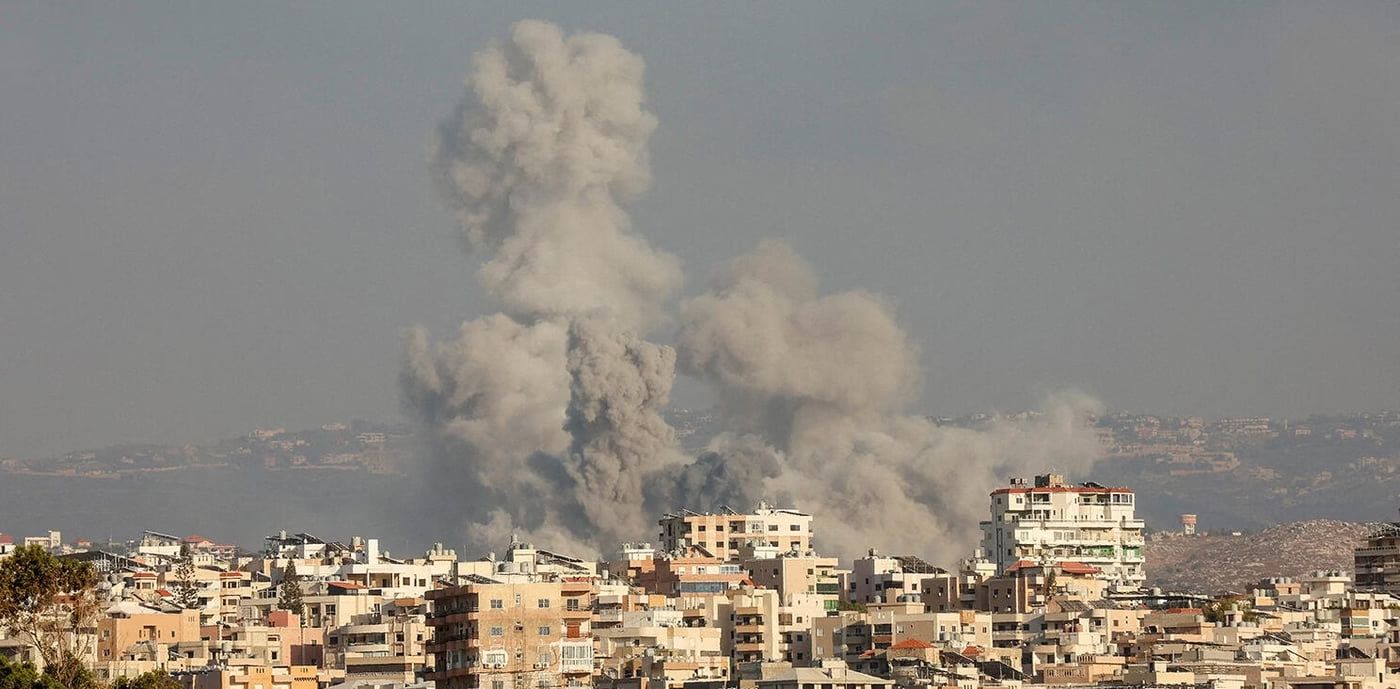

The Middle East conflict escalates sharply as Israel and the United States intensify military operations against Iran following a series of unprecedented attacks and counterattacks that have spread across the region. What began as targeted strikes has now evolved into one of the most volatile confrontations in years, involving multiple countries and militant groups.
Over the past 72 hours, Israeli and U.S. forces have carried out extensive airstrikes across Iran, including key command centres, security infrastructure, and government facilities in Tehran. Iranian authorities report hundreds of civilian and military casualties, while the Iranian Red Crescent put the death toll in the high hundreds as the conflict widens.
Simultaneously, the conflict has spread to Lebanon, where Hezbollah — an Iranian-aligned militia — has launched rocket and drone attacks on northern Israel in response to the escalation. Israel has struck Hezbollah targets in Beirut and southern Lebanon, leading to at least tens of thousands of civilians being displaced as families flee combat zones and evacuation orders intensify.
The crisis has also impacted Gulf states, with Iranian forces reportedly attacking U.S. and allied military facilities and tactical infrastructure in Saudi Arabia, Kuwait, and the United Arab Emirates, further broadening the theatre of conflict.
Global repercussions are mounting. The Strait of Hormuz, a critical oil transit chokepoint, has seen shipping disruptions and warnings of closure by Iranian military units, driving energy prices higher and stoking international economic anxiety.
Governments worldwide are issuing evacuation advisories and convening emergency diplomatic sessions to prevent full-scale regional war. Despite mounting pressure, top political leaders on all sides signal that major combat operations are likely to continue, potentially reshaping Middle Eastern geopolitics in the coming weeks.
❓ Frequently Asked Questions (FAQs)
Q1. Why has the Middle East conflict escalated now?
The current escalation follows a series of joint U.S.–Israeli airstrikes on Iran’s leadership and military infrastructure and swift retaliatory missile and drone attacks by Iran and allied groups, expanding fighting across national borders.
Q2. What areas are most affected by the conflict?
Major hotspots include Tehran (Iran’s capital), Beirut (Lebanon), northern Israel, and military installations across Gulf states. Civilians in southern Lebanon and Tehran have suffered widespread displacement and casualties.
Q3. How many people have been displaced or killed?
Exact figures remain fluid, but tens of thousands have been displaced, especially in Lebanon, and hundreds of fatalities have been reported across the conflict zones.
Q4. Are other countries involved?
Yes—Iran’s strikes targeted U.S. bases and facilities in Saudi Arabia and other Gulf states, prompting international evacuation advisories.
Q5. What are the global implications?
The crisis threatens energy market instability, raises concerns over a broader regional war, and has triggered urgent diplomatic efforts worldwide to prevent further escalation.
🛢️ Oil Markets & Energy Impact
The most immediate global shock is in energy markets. Tensions around the Strait of Hormuz — a critical maritime route through which nearly one-fifth of the world’s oil supply passes — have triggered volatility in crude prices.
Brent crude futures have surged amid fears of shipping disruptions.
Insurance premiums for tankers operating near Iran and Gulf waters have spiked.
Major oil producers like Saudi Arabia and the United Arab Emirates are on high alert, reinforcing infrastructure security.
If maritime movement slows or blockades intensify, analysts warn crude prices could see another sharp rally, affecting inflation globally — especially in oil-importing nations such as India.
🏠 Regional Refugee & Humanitarian Crisis
The humanitarian fallout is expanding rapidly.
Airstrikes in Tehran and retaliatory attacks in Beirut have displaced tens of thousands of civilians.
Southern Lebanon faces heavy cross-border shelling linked to Hezbollah, increasing internal displacement.
Border crossings into neighboring countries are seeing growing civilian movement.
The United Nations has warned of a potential large-scale refugee crisis if sustained bombardment continues. Emergency shelters are nearing capacity in several areas, and humanitarian corridors remain uncertain due to active combat zones.
🌍 Diplomatic & Geopolitical Responses
Global diplomatic activity has intensified to prevent a full regional war.
The United States maintains that its strikes alongside Israel are defensive and targeted at military infrastructure.
The European Union has called for immediate de-escalation and emergency ceasefire talks.
China and Russia have urged restraint while criticizing Western military expansion in the region.
Diplomatic backchannels are reportedly active, but public rhetoric remains firm on all sides. The risk of miscalculation is high, particularly if additional regional actors are drawn into the confrontation.
📊 Strategic Outlook
Short Term: Continued volatility in oil prices and sporadic cross-border strikes.
Medium Term: Risk of broader regional alignment shifts and possible sanctions escalation.
Long Term: Structural geopolitical realignment in West Asia, affecting trade corridors, defense alliances, and energy security frameworks.