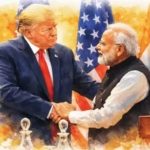

The India–US trade deal is slowly taking shape, and both sides are showing signs of progress. Talks between New Delhi and Washington have moved forward in recent months, raising hopes of a stronger economic partnership between the world’s largest democracy and its biggest economy.
While no final agreement has been announced yet, several key areas of discussion are now clear.
What We Know So Far
India and the United States are focusing on boosting trade, reducing barriers, and making it easier for businesses to operate across borders. Officials from both countries have spoken about improving market access, especially for technology, manufacturing, and services.
There is also strong interest in expanding cooperation in areas like clean energy, defence production, digital trade, and supply chains. The goal is to reduce dependence on a few global suppliers and create more reliable trade routes.
Another positive sign is the steady rise in bilateral trade. India and the US already trade goods and services worth hundreds of billions of dollars each year, and both governments want to push that number much higher.
Big Questions Still Remain
Despite the progress, several issues are still unresolved. Tariffs on certain products, visa rules for skilled workers, and data protection laws remain sensitive topics.
Farm trade is another area where opinions differ. The US wants greater access to India’s agricultural market, while India is cautious about protecting its farmers and local industries.
There is also uncertainty about timelines. While talks are active, it is not clear when a final deal might be signed.
What It Means for Growth and Jobs
If successful, the India–US trade deal could bring major benefits. Indian exporters may gain better access to the US market. American companies could find new investment opportunities in India.
More trade usually means more jobs. Manufacturing, IT services, logistics, and startups could all benefit. Consumers may also see more choices and competitive prices.
Impact on Global Trade
A strong India–US trade partnership would send a clear signal to the world. It would show that two large democracies can work together to shape fair and stable global trade rules.
As global supply chains shift, this deal could help both countries play a bigger role in the world economy.
In the coming months, all eyes will be on the negotiations. The foundation is being built. Now, the final shape of the deal remains to be seen.
📌 FAQs
What is the India–US trade deal about?
The India–US trade deal aims to increase trade, reduce barriers, improve market access, and strengthen cooperation in technology, manufacturing, energy, and services.
Has the India–US trade deal been finalised?
No. Talks are ongoing. While progress has been made, several key issues like tariffs, visas, and farm trade are still under discussion.
Why is the India–US trade deal important?
The deal could boost economic growth, create jobs, attract investment, and strengthen supply chains for both countries.
How will the trade deal impact Indian businesses?
Indian exporters may gain easier access to US markets, while startups and manufacturers could benefit from new partnerships and investments.
What challenges remain in the negotiations?
Unresolved issues include tariff differences, agricultural market access, data rules, and mobility for skilled workers.
When is the deal expected to be completed?
There is no fixed timeline yet. Officials from both sides say negotiations are progressing, but more talks are needed.
🔍 Strong Opinion / Explainer Version
The India–US trade deal is no longer just a diplomatic discussion—it is becoming an economic necessity.
Both countries clearly need each other. India wants investment, technology, and market access. The United States wants reliable partners, stable supply chains, and faster growth in Asia. On paper, the deal makes perfect sense.
Progress has already been made. Trade between India and the US is growing steadily. Cooperation in defence, digital services, and clean energy is expanding. Political signals from both sides suggest that the relationship is stronger than ever.
Yet, the delay in finalising the deal raises an important question: what is holding it back?
The answer lies in tough compromises. Tariffs remain a sticking point. Agriculture continues to be sensitive. Visa policies affect skilled workers and tech companies. These are not small issues, and neither side wants to move too fast.
Still, the bigger picture cannot be ignored. Global trade is changing. Supply chains are shifting away from risk-heavy regions. In this environment, a strong India–US trade partnership could offer stability not just to the two countries, but to the global economy.
If the deal succeeds, it could unlock jobs, boost exports, and give businesses more confidence to invest. If it stalls, both sides risk missing a rare strategic opportunity.
The foundation has been laid. Trust exists. What’s needed now is political will.
The coming months will decide whether this trade deal becomes a milestone—or another missed chance.