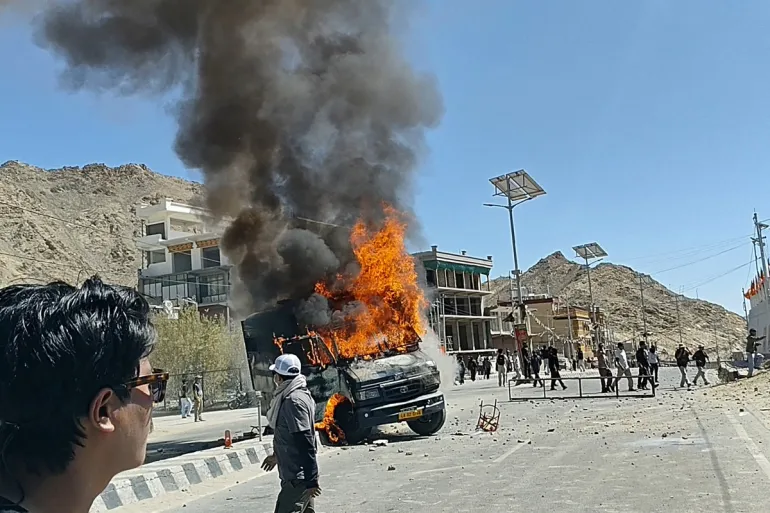

New Delhi News Update: The Government of India has officially declared the National Socialist Council of Nagaland (Khaplang faction), also known as NSCN-K, an unlawful association under the Unlawful Activities (Prevention) Act (UAPA). The ban, effective from September 28, 2025, includes all its wings, front organisations, and affiliated bodies.
This major step comes as part of India’s ongoing counter-insurgency and internal security strategy in the Northeast. The Ministry of Home Affairs (MHA) has cited the group’s violent activities, arms smuggling, and threats to India’s sovereignty as key reasons behind the decision.
Who is NSCN (Khaplang Faction)?
The NSCN was originally formed in the 1980s after a split within the Naga National Council (NNC). Over time, it fractured into multiple factions, including:
-
NSCN (Isak-Muivah) or NSCN-IM
-
NSCN (Khaplang) or NSCN-K
The NSCN-K was led by SS Khaplang, a Myanmar-based insurgent leader. The group has been notorious for:
-
Armed insurgency against Indian security forces.
-
Cross-border militant camps in Myanmar.
-
Attacks on Indian Army convoys and bases in Northeast India.
-
Involvement in extortion, illegal taxation, and arms smuggling.
Even after Khaplang’s death in 2017, the group continued militant operations along the India-Myanmar border.
Why Did the Government Ban NSCN-K?
The MHA declared NSCN-K an unlawful association for the following reasons:
-
Militant Attacks: The group has carried out violent attacks on security personnel in Nagaland, Manipur, and Arunachal Pradesh.
-
Cross-Border Operations: Its camps across the Myanmar border pose a significant security challenge.
-
Threat to Sovereignty: Activities of the outfit undermine India’s sovereignty and integrity.
-
Obstruction to Peace Talks: While some Naga groups are engaged in dialogue with the Centre, NSCN-K has often opposed or disrupted the peace process.
The ban aims to curb financing, recruitment, and support networks that sustain the outfit’s insurgency.
Impact on the Northeast Region
The decision to outlaw NSCN-K has far-reaching implications for Nagaland and the entire Northeast:
-
Boost to Peace Process: It signals the government’s zero-tolerance policy toward groups rejecting peace talks.
-
Crackdown on Funding: Properties and bank accounts linked to the group may be seized.
-
Enhanced Security: Additional paramilitary forces are likely to be deployed in sensitive areas.
-
Pressure on Myanmar Links: India may increase diplomatic pressure on Myanmar to dismantle NSCN-K camps.
For the local population, this could bring more stability, though the possibility of retaliatory strikes cannot be ruled out.
Reactions to the Ban
-
Security Experts: Many analysts welcomed the move, calling it necessary for national security.
-
Local Leaders: While some supported the decision, others urged the government to also focus on dialogue to address the political aspirations of the Naga people.
-
Civil Society Groups: Some worry that harsh crackdowns could lead to human rights concerns in the region.
The Bigger Picture: Naga Peace Process
The Naga peace talks have been ongoing for decades. In 2015, the Government of India signed a Framework Agreement with NSCN-IM, but a final settlement is still pending.
By banning NSCN-K, the Centre has drawn a clear line: only groups willing to engage in peaceful negotiations will be considered legitimate stakeholders.
Final Thoughts
The Indian government’s decision to declare NSCN (Khaplang faction) unlawful marks a significant step in the fight against insurgency in the Northeast. While the ban strengthens security measures, the ultimate solution still lies in political dialogue, reconciliation, and sustainable development in Nagaland and neighboring states.
As India balances peace efforts with strict security actions, the world will be watching how this impacts both insurgency and the fragile stability of the region.