
Visa fees, ongoing engagement, and tensions between India and the US
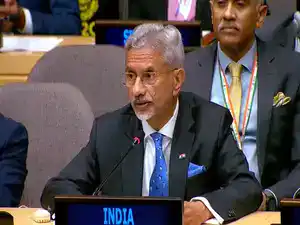
The first direct meeting between External Affairs Minister S. Jaishankar and U.S. Secretary of State Marco Rubio since the U.S. implemented new tariff and visa policies targeting India took place on the fringes of the U.N. General Assembly in New York.
- Visa fees, ongoing engagement, and tensions between India and the US
- Peace Calls, Double Standard Criticism, and the Global South Agenda
- Trade and Multilateral Diplomacy: Institutional Reform, EU Free Trade Agreement
- Relations between China and India and Regional Diplomacy
- Function in the India-Pakistan Conflict and Foreign Policy Uniformity
- Conclusions & Strategic Importance
— The two ambassadors reiterated the significance of “sustained engagement” to manage tensions and maintain the larger strategic cooperation, even if the U.S. has increased duties on Indian exports linked to India’s purchase of Russian oil.
A recently announced USD 100,000 price for H-1B visas was openly challenged by Jaishankar, who claimed that many nations are unable to meet labor demands from domestic populations alone. He urged a reconsideration of global mobility frameworks.
His comments, which highlight the importance of international talent flows to India’s economic and geopolitical objectives, have been seen as a covert critique of US immigration policies.
Peace Calls, Double Standard Criticism, and the Global South Agenda
Jaishankar’s strategic messaging at the G20 Foreign Ministers’ meeting was consistent:
He called for a stop to international hostilities, pointing to the crises in Gaza and Ukraine and underlining how they affect the security of food, energy, and fertilizer, particularly for developing countries.
He resisted what he saw as “double standards” among the big countries, particularly with regard to sanctions and oil politics. He hinted that selective enforcement damages Global South countries and erodes confidence without specifically mentioning any countries.
He cautioned that in a fragile global economy, it is detrimental to create instability in the markets for energy and other necessities, especially through restrictive regulations or sanctions.
He emphasized the dangers of being overly dependent on a single market or supplier during a conference with like-minded countries from the Global South, calling for stronger supply chains and more South-South collaboration.
Furthermore, Jaishankar reaffirmed that national demography alone cannot satisfy labor demands and that the world today needs a global workforce at a UNGA side event organized by ORF.
He said that countries need to create “more acceptable, contemporary” methods for labor mobility and connected this to the discussions surrounding visa policies.
Trade and Multilateral Diplomacy: Institutional Reform, EU Free Trade Agreement
Jaishankar urged the India-EU Free Trade Agreement (FTA) to be finalized quickly, arguing that doing so would benefit both parties’ economies. Instead of adhering to antiquated post-World War II structures, he has steadfastly argued over the years for the reform of multilateral institutions to better reflect the global power balances of the twenty-first century. Along with condemning selective approaches and reiterating that counterterrorism is crucial for peace and development, he has also highlighted India’s zero tolerance policy for terrorists.
Relations between China and India and Regional Diplomacy
India-China ties have improved during the last nine months, according to Jaishankar, who met with his Chinese colleague earlier in mid-2025. He emphasized the significance of ongoing discussions and de-escalation over outstanding border issues.
During the discussion, Chinese Vice President Han Zheng urged both countries to respect each other’s concerns and maintain their “practical cooperation.”
Function in the India-Pakistan Conflict and Foreign Policy Uniformity
Jaishankar has taken a notably forceful diplomatic stance during the India-Pakistan crisis in 2025:
He denied claims of U.S. mediation, attributing the need for Pakistan to seek a truce to India’s military counterstrike, Operation Sindoor.
He stressed that any retaliatory escalation would be met proportionately and that India’s military goals were “measured, careful, non-escalatory.”
His constant message frequently emphasizes strategic prudence, rejection of outside intervention, and principled sovereignty—especially in South Asian dynamics.
Conclusions & Strategic Importance
Jaishankar’s tone has become more strong as he utilizes high-stakes diplomacy to challenge measures (such as tariffs, sanctions, and visa changes) that India considers unjust.
He is promoting institutional transformation, diverse supplier chains, and more egalitarian policy paradigms, thereby establishing India not only as a rising power but also as a thought leader for the Global South.
He seeks a cogently ambitious foreign policy narrative by combining his approach to global challenges (terrorism, workforce mobility), defense positions (Pakistan conflict), and trade (EU FTA).
His diplomacy is well-balanced; he maintains avenues (as with the U.S.) to sustain essential partnerships while simultaneously advocating against perceived injustices.